


MÁLAGA / 19, 20, 21 y 22 de septiembre de 2023
Investigadores del grupo de investigación Healthy Architecture & City de la Universidad de Sevilla, exponen un avance de sus investigaciones en el Congreso Internacional de Enfermedades Neurodegenerativas, organizado por la Fundación Reina Sofia, Fundación Centro de Investigación Enfermedades Neurológicas, Instituto de Salud Carlos III, el Centro de Investigación Biomédica en red Enfermedad Neurodegenerativas y, este año, por primera vez, por la Sociedad Española de Neurología. El Ayuntamiento y la Diputación de Málaga colaboran poniendo a disposición el Auditorio Edgar Neville y otros recursos de apoyo al Congreso. El trabajo, expuesto en forma de póster, se titula:
Adaptación espacial del entorno habitacional a personas con alzhéimer: avance de resultados para un manual de buenas prácticas
 En este panel se exponen los avances obtenidos en una investigación arquitectónica y tecnológica destinada a diseñar, adaptar y construir espacios, entornos y ámbitos domésticos destinados a usuarios con enfermedad de alzhéimer (EA). El objetivo es incrementar la seguridad, accesibilidad y autonomía en los entornos domésticos de estos enfermos, con el fin de aumentar su calidad de vida, tanto a ellos como a sus cuidadores y/o familiares. El espacio físico, su dimensión morfológica, sus funciones y connotaciones ambientales pueden facilitar la orientación, estimular la memoria, contener el miedo o reducir la sensación de frustración; esta interacción se produce a través de estímulos fisiológicos o cognitivos que perciben las personas afectadas por EA en el espacio físico que habitan.
El póster se centra en la definición de las pautas de diseño útiles para construir un entorno doméstico que facilite las Actividades Instrumentales de la Vida Diaria (AIVD) de estos usuarios. La exposición de estos resultados es una oportunidad para presentar un avance del manual de soluciones prácticas que se ha realizado, mostrando, además, qué elementos y aspectos espaciales son necesarios incorporar en equipamientos como un hospital o una residencia destinada a este colectivo de personas.
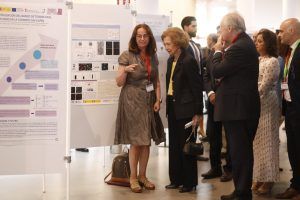
La relación entre Arquitectura y Memoria es un campo de trabajo muy poco abordado en el estudio de las enfermedades neurogenerativas. Desde la Neuroarquitectura ha habido sustanciales progresos en los últimos años en mejoras habitacionales destinadas a la población con demencia y, en particular, para este colectivo con enfermedad de alzhéimer. Esta línea de investigación es desarrollada por el grupo Healthy Architecture & City desde el año 2016 bajo el título Proyectar para la ausencia de memoria, en colaboración con la línea de Neurociencia Básica y Aplicada de la Facultad de Medicina de la Universidad de Málaga. En ella se enmarcan varios proyectos de investigación desarrollados por los investigadores de ambos grupos.
El Congreso Internacional de Enfermedades Neurodegenerativas se celebra un año más bajo la presidencia de S.M. Reina Sofía, y vuelve a su fecha habitual del 19 al 22 de septiembre para coincidir y celebrar el Día Internacional del Alzheimer. Como cada año, este Congreso científico pretende acercar a la sociedad los avances de la investigación en la lucha contra el Alzheimer y otras enfermedades neurodegenerativas y, sobre todo, plantear la evidente necesidad de avanzar en la búsqueda de soluciones y respuestas globales debido a sus consecuencias sociales.
El Congreso Internacional de Enfermedades Neurodegenerativas se centra en los avances de la investigación en trastornos neurodegenerativos. Ofrece un foro para discutir una variedad de áreas de interés relacionadas con aspectos básicos, clínicos y traslacionales de la investigación sobre enfermedades neurodegenerativas, brindando a investigadores de todo el mundo oportunidades para discutir y compartir experiencias y entretener temas que se extienden hacia el futuro. y será vital para lograr el avance en el conocimiento y tratamiento de estas enfermedades.
En el congreso participan investigadores de varios países como Rik Ossenkoppele (Universidad de Ámsterdam), Jorge Sepulcre (Universidad de Harvard), Nick Ashton (Universidad de Gotemburgo), Alberto Lleó (Hospital Santa Creu i Sant Pau-CIBERNED). El Dr. Jean-Charles Lambert (Institut Pasteur de Lille) impartirá la conferencia magistral.
