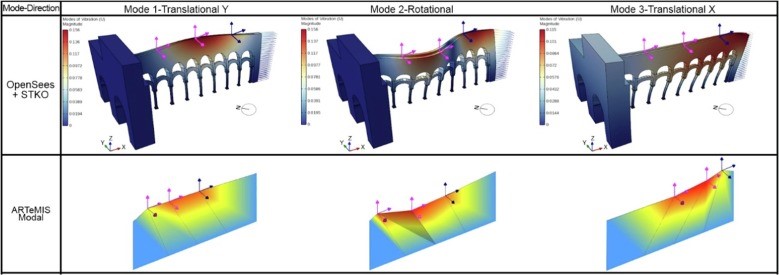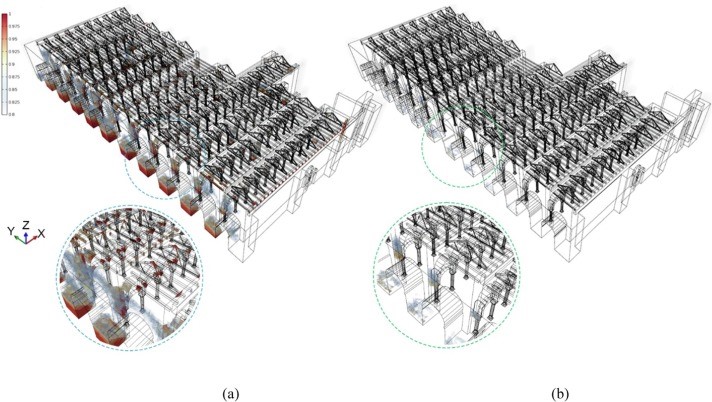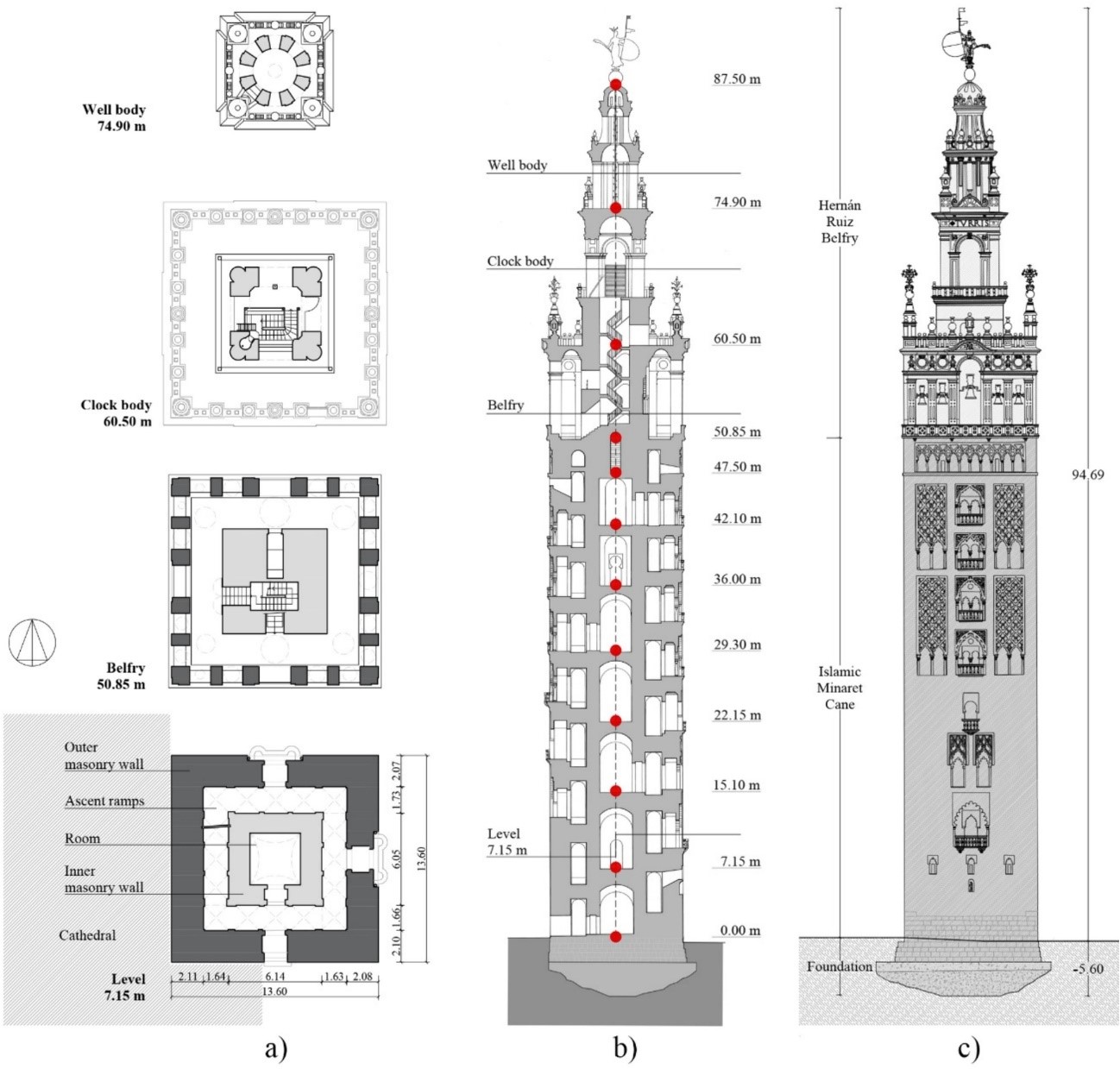
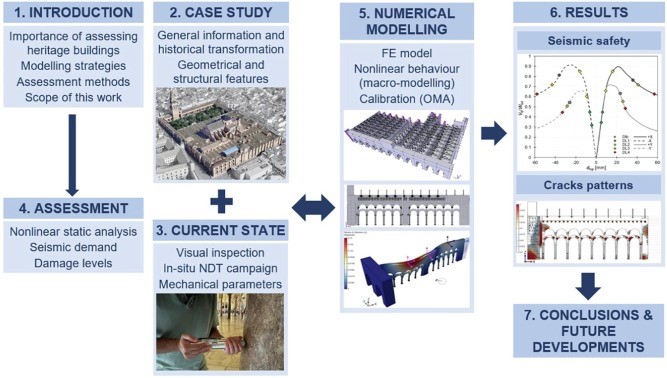
This project aims to enhance the resilience of cultural heritage by analysing the seismic vulnerability of historically significant buildings, particularly focusing on the Mosque of Córdoba and the Giralda of Seville as paradigm cases. Both structures are iconic symbols of their cities and have been designated UNESCO World Heritage Sites.
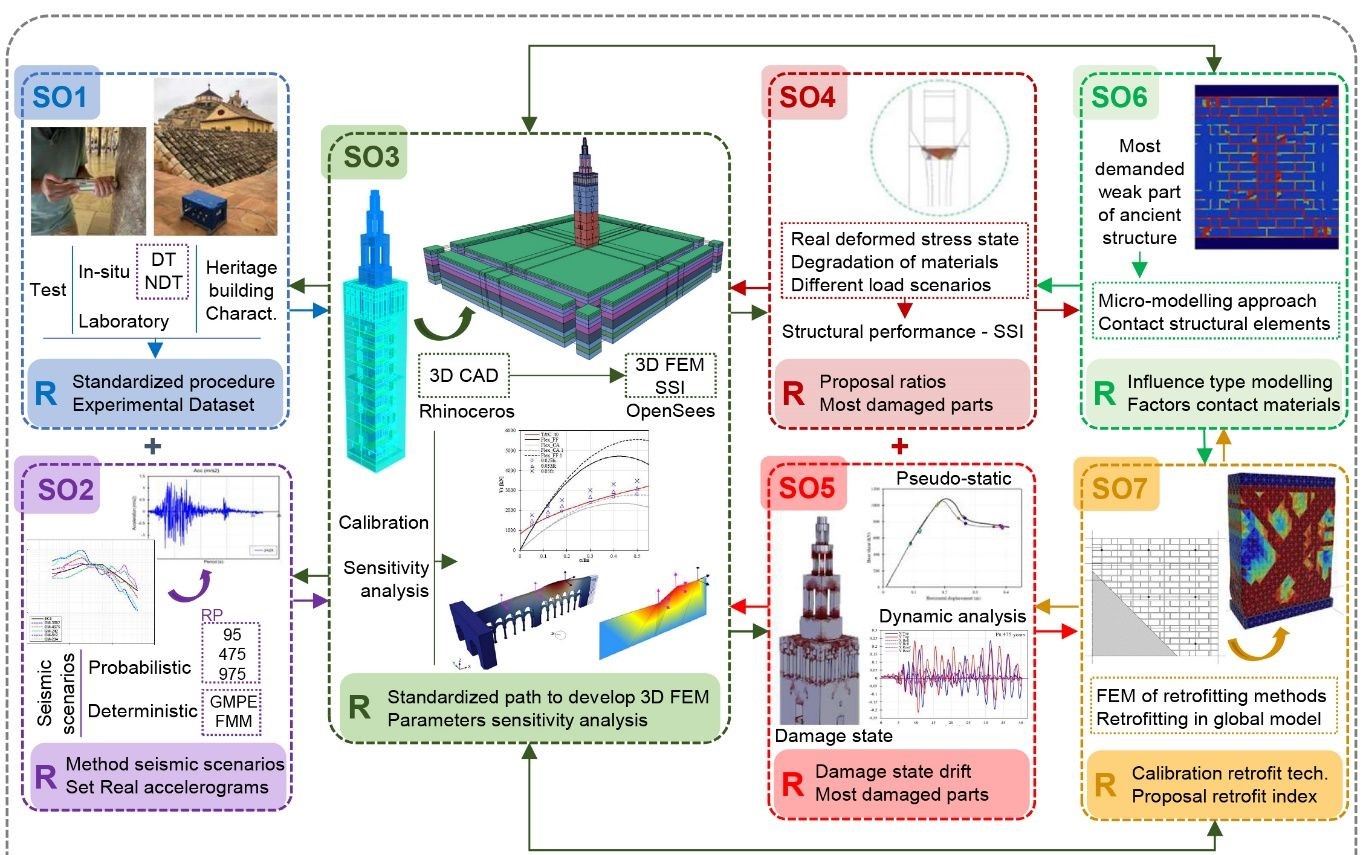
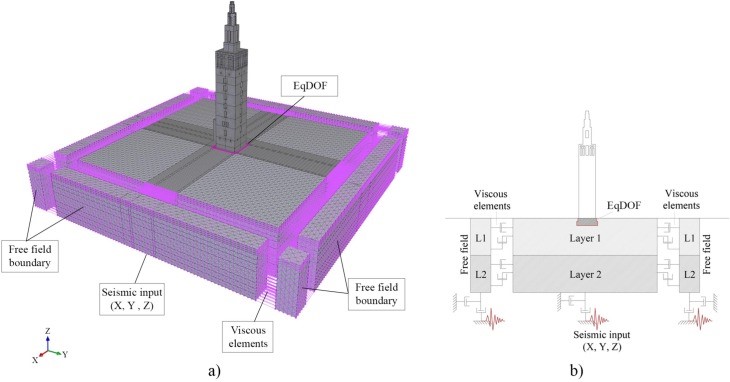
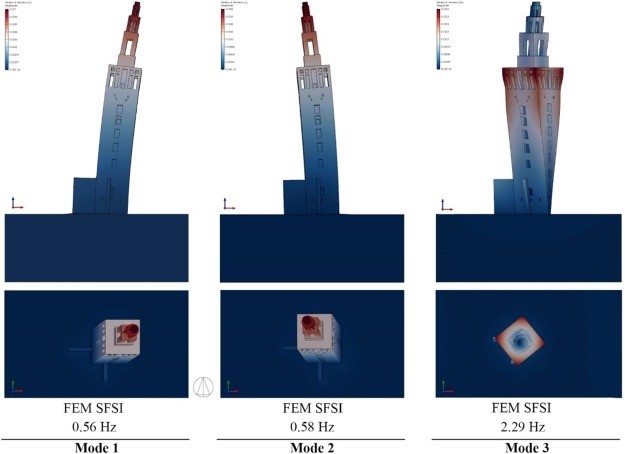
The project’s uniqueness lies in its consideration of ground conditions to achieve an integrated soil-foundation-structure seismic response analysis. While such analyses are emerging in the international scientific community, they are not yet standardised, particularly for heritage buildings of such importance. The project will utilise advanced coupled seismic analysis methods developed in recent research, facilitating knowledge transfer to our region. These techniques, currently under development, will be adapted and further extended, representing a significant advancement in understanding. Key innovations include:
- Pioneering Studies: No existing studies have examined the seismic behaviour of the two buildings targeted by this project.
- Comprehensive Modelling: Detailed modelling of the ground and buildings will be conducted using new tools and resources to update available information. Geophysical measurements of the ground will be taken using non-invasive tests, and building information will be gathered using ultrasound and triaxial seismographs.
- Advanced Dynamic Analysis: A new, advanced, and specific model for the soils of Seville and Córdoba (utilising data from geophysical surveys) will be developed and programmed into the software. This ground modelling is applicable to other buildings located in the Guadalquivir Valley, which share a similar geotechnical profile.
- Seismic Scenarios: The analysis will consider not only seismic actions prescribed by Spanish and European regulations but also various deterministic seismic scenarios previously studied by the research group. To date, these buildings have not been analysed using such scenarios.
- Coupled Analysis: Analyses will be conducted in a coupled manner, integrating the soil, foundation, and structure of the proposed buildings.
- OpenSEEs Software: The project will employ OpenSEEs, a recently developed and widely used software in seismic engineering research. This open-source, free software is designed for complex finite element modelling, providing comprehensive control over input parameters and simulation results. The open-source nature allows for incremental improvements, with the project contributing new code blocks to the international scientific community. This will not only bring Andalusia up-to-date with the latest international seismic analysis, evaluation, and rehabilitation techniques but also enable the region to contribute significantly to global knowledge.
- New Methodology: A new methodology for seismic safety analysis of such buildings will be proposed, identifying principal failure mechanisms and expected damage.
- Seismic Rehabilitation: The project aims to integrate seismic rehabilitation into regular conservation efforts, incorporating reinforcement measures holistically within routine maintenance programs, minimising disruption to building use.
Project details
Title
Reference
US-1380730
Funding Institution
Andalusian Regional Government. Ministry of Economy, Knowledge, Business and University [Junta de Andalucía. Consejería de Economía, Conocimiento, Empresas y Universidad]
Starting date
01/01/2022
Ending date
31/05/2023
Team
Main Researchers:
Researchers:
Amaro Mellado, José Lázaro
de Miguel Rodríguez, Jaime
Durand Neyra, Percy
Erdogmus, Ece
Estêvão, João M.
de Justo Alpañés, José Luis
Navarro Casas, Jaime
Peavy, Mathew
Puckett, Jay
Rebollo Puig, Gabriel
Requena García de la Cruz, María Victoria
Reyes Molina, Jorge Antonio
Romero Sánchez, Emilio