
Team
Meet the people who make up this team

Current members
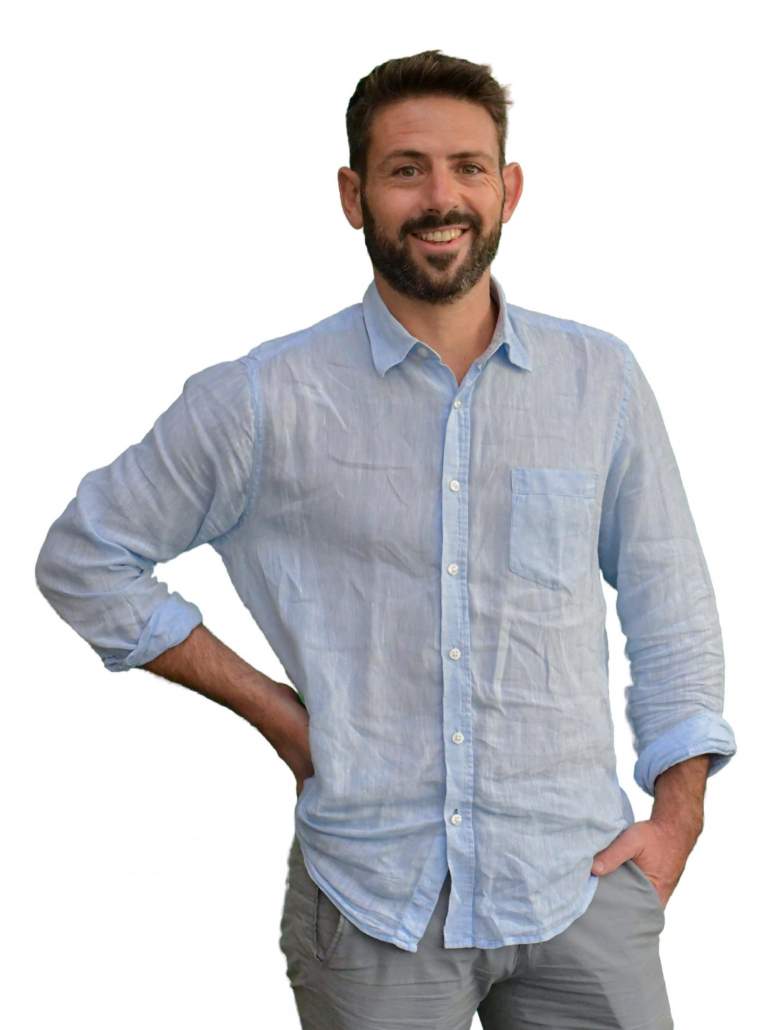
Lino Camprubí Bueno
PRINCIPAL INVESTIGATOR (PI): Lino Camprubí, Universidad de Sevilla (ERC Consolidator Grant no. 101002330; ERC Proof of Concept MAP4DMED)
Lino Camprubí is a Ramón y Cajal Researcher at the Universidad de Sevilla. After graduate studies in Cornell, he obtained his PhD in UCLA in 2011. He has worked as a researcher at the UABarcelona and the MPIWG in Berlin, as a visiting lecturer at UChicago, and as a visiting scholar at the IMERA Center for Advanced Studies (Marseille). He was co-PI of the research project IBEROT@C and PI of the Consolidación Investigadora HAPEARTH; he is currently PI of the ERC-CoG DEEPMED and PI of the ERC Proof of Concept grant MAP4DMED. He has wide interests concerning history and philosophy of science, from engineering and politics to oceanography and warfare.
Camprubí is the author of *Engineers and the Making of the Francoist Regime* (MIT Press, 2014), *Franco’s Engineers* (Crítica, 2017), which won the 2018 ICOHTEC Prize, and, together with Pérez-Jara, *Science and Apocalypse in Bertrand Russell*.He has also co-edited the special issue "Experiencing the Global Environment" (SHPS, 2018) as well as the books *Technology and Globalisation* (Palgrave Economic History Series, 2018), *From the Cold War to Global Warming* (Catarata, 2018), and *Contemporary Materialism: Its Ontology and Epistemology* (Springer, Synthese, 2022). He has published in *HSNS*, *Technology and Culture*, *Energy Policy*, *SHPS*, and *Diplomatic History*, amongst others.
e-mail: lcamprubi@us.es
Alessandra Passariello
POSTDOCTORAL RESEARCHER
Alessandra Passariello is a historian of science working on the history of marine sciences and the life sciences. She holds a PhD in Philosophy from Sapienza University of Rome (2017), with a thesis on Joseph Needham and Jean Brachet’s chemical embryology, and she has held postdoctoral positions at the Jacques Loeb Centre (Ben Gurion University of the Negev, Israel) and at the IHPST (Université Paris 1 Panthéon-Sorbonne – CNRS). Since 2021 she has been the in-house historian of the Historical Archives and Marine Library of the Stazione Zoologica Anton Dohrn in Naples, where she also led the library’s large-scale digitization project. She has published in the Journal of the History of Biology and History and Philosophy of the Life Sciences, among others.
Starting in 2027, she joins DEEPMED through her winning of the MSCA project MEDSciNaries (Marine sciences and the emergence of the first Mediterranean Ecological Imaginaries), the first historical account of how the Mediterranean became an object of study for the ecological sciences. The project reconstructs the activities of the Mediterranean Association for Marine Biology and Oceanology (MAMBO, 1964–1984), the first non-governmental pan-Mediterranean association devoted to monitoring, studying and protecting the Mediterranean Sea, to trace the early roots of today’s discourses on tropicalization, habitat destruction and fish-stock decline.


Aymen Chrigui
DOCTORAL RESEARCHER
Aymen CHRIGUI is a PhD student at the University of Seville, where he is currently pursuing a doctoral research programme in the framework of the DeepMed project.
In 2006, Aymen graduated in maritime administration and port management and spent two years in the private sector, gaining valuable experience in ship consignment, ship chartering operations and transport and logistics. Since 2009, Aymen has been an integral part of the Tunisian Maritime Authority, where he serves as a merchant marine and port officer.
Aymen holds a joint Master's degree in Maritime Spatial Planning (MSP) from Iuav Venice (Italy), in collaboration with the University of Seville (Spain) and the University of Azores (Portugal). His academic background has equipped him with a thorough understanding of the complexities of maritime spatial planning. In 2019, Aymen had the opportunity to intern at the World Ocean Council (WOC), where he conducted a research study on the Blue Economy industry and business in the Mediterranean Sea. His research explored the potential of Maritime Spatial Planning in the region. He is currently active as a member of the Med MSP CoP, promoting its involvement in this field.
e-mail:achrigui@us.es
Ada Ferraresi
DOCTORAL RESEARCHER
Ada Ferraresi is a PhD student in History in the DEEPMED project at the University of Seville.
After a bi-national degree in History between Italy and France (University of Turin and Université Lumière II, Lyon), she completed her MA studies in History and Intensive Language (Arabic) at SOAS University of London. Following her graduate programme, she spent the summer of 2022 in Nablus, OT, Palestine, where she completed her intensive Arabic language course and conducted fieldwork for her dissertation on Narrating Palestinian Identity: A Game of Resistance and Subjugation. At SOAS, she also worked as a research assistant with the Walter Rodney Historical Research Collective, where she contributed to the creation of the seminar series Histories of Capitalism and Race in the Middle East and Indian Ocean.
Her research interests combine the history of science and technology with colonial and postcolonial studies, specifically in the Mediterranean and the Middle East. With this interdisciplinary approach, she hopes to highlight the connections between the colonial legacy of the Mediterranean depths and the challenges the region currently faces (humanitarian and environmental), examining the interactions between cultural and material history.
e-mail:aferraresi@us.es


Pablo Lima Hernández
DOCTORAL RESEARCHER
Pablo is a PhD candidate in the DEEPMED project, with a bachelor’s degree in physics and a master’s degree in epistemology of natural and social sciences, both from the Complutense University of Madrid. His academic background in natural sciences and epistemology are the foundations of his thesis, which focuses on the history and epistemology of Mediterranean physical oceanography and marine ecology over the second half of the 20th century. His current line of research explores how the Mediterranean Sea came to be known as a miniature ocean among the ocean sciences and management research communities since the upsurge of global environmental science and governance of the 1970s.
The Mediterranean has been increasingly considered as a ‘scaled’ model that resembles the world ocean in many physical, biological and climatic features and has thereby served as a test basin to probe oceanographic models, real-time ocean observing systems and marine policies alike. The unfolding of environmental concerns and earth-systems thinking in regional and semi-enclosed seas played a crucial role in this interplay of smaller and larger scales of oceanographic inquiry. In particular, the forge of alliances between international scientific institutions and programs with often divergent visions of the Mediterranean marine ecosystem, such as UNESCO, UNEP, UE and ICSEM (International Commission for the Scientific Exploration of the Mediterranean), were conducive to the emergence of Mediterranean-wide, interdisciplinary research networks on marine pollution, overfishing and climate change. Altogether, they acted as a condition of possibility for the making and globalization of Mediterranean oceanographic knowledge and led to various multifaceted uses of the Mediterranean as an open-air model or natural laboratory for the understanding and manageability of global change.
e-mail:plima@us.es
Partners

María C. Villarín Clavería
POSTDOCTORAL RESEARCHER
María C. Villarín holds a PhD in Geography and two Master’s degrees, one in Planning and Management of Development at Local and Global Levels and the other in Geographic Information Systems, both from the University of Seville. I have extensive experience in developing Geographic Information Systems (GIS) and statistical methodologies for analysing environmental variables and building databases for predictive models. In 2015, I was awarded second prize in the Social Sciences category at the annual "Archivo Hispalense" competition organised by the Seville Provincial Council. As a result, I published a book entitled "The City of Seville through its Domestic Water Demand", as well as numerous articles, five of which were published in JCR-indexed international journals ranked in the top quartile and decile in their respective fields.
In recent years, during a research stay at the Norwegian Institute for Water Research (NIVA) in Bergen (Norway), I turned my research towards climate change, water conflicts and legislation, and the circular economy. I also acquired and applied complementary skills in new data-processing methods such as machine learning. I lived in Lyon (France), where I worked at the French National Research Institute for Agriculture, Food and Environment (INRAE) as an Ingénieur de Recherche on a project in which I applied machine learning methods to develop a model predicting the photodegradation of pollutants.
e-mail:mvillarin@us.es
Alberto Celis Pozuelo
POSTDOCTORAL RESEARCHER
My research focuses on environmental history, particularly in relation to bodies of water, by correlating geological and historical sources across different spatial and temporal scales. Ever since my university days, I have sought to combine my passion for geography and history with a concern for the environment. I am firmly convinced of the benefits of interdisciplinary collaboration, which has led me to work alongside geologists and hydrogeologists to analyse the interactions between humans and nature. My interdisciplinary research enabled me to complete my doctoral thesis, entitled "Natural and anthropogenic changes in Las Tablas de Daimiel National Park based on sedimentary, archaeological and historical records (Bronze Age to the present day)". This has resulted in four articles published in high-impact scientific journals:
My first book is "Humedales en crisis. Lo que nos enseña la historia de las Tablas de Daimiel" (Libros de la Catarata, 2026).
After holding a Margarita Salas postdoctoral fellowship and then a Juan de la Cierva postdoctoral fellowship, both at the Universidad de Sevilla and associated to DEEPMED, Alberto now holds a research access contract (contrato de acceso) at the Universidad de Sevilla, in the Department of Contemporary History.
e-mail:pozuelo@us.es


Jip van Besouw
POSTDOCTORAL RESEARCHER
Jip van Besouw is a historian and philosopher of science.
In 2017, he was awarded a PhD in Philosophy by the Free University of Brussels with a thesis on the 18th-century Dutch mathematician, philosopher and physicist Willem Jacob 's Gravesande. Prior to this, he studied Physics and Astronomy (BSc 2011) and History and Philosophy of Science (MSc 2013) at Utrecht University. Since 2018, he has held various postdoctoral fellowships in Brussels and Utrecht. Jip’s research broadly addresses the development of experimental and mathematical practices in the history of the physical sciences. He has focused in particular on the negotiation of these practices outside academic institutions.
Jip's last research project before joining DEEPMED focused specifically on the interactions between water science and hydraulic engineering, from Torricelli to the mid-18th century. He has published works on the history of mechanics, Newtonianism, the reception of Einstein's theory of relativity and the history of hydraulics.
Jip is currently a postdoctoral researcher at the Sant'Anna School of Advanced Studies – Pisa. He will soon begin a Marie Skłodowska-Curie Postdoctoral Fellowship hosted by DEEPMED (Universidad de Sevilla) and Universidad EAFIT (Medellín, Colombia).
E-mail: jbesouw@us.es
Julián Bueno Risco
GEOGRAPHIC INFORMATION SYSTEMS AND INFORMATION TECHNOLOGY EXPERT
My collaboration with the DEEPMED project consists of helping to design, organise and build the spatial data infrastructure (database and web geo-viewer) for the project as well as to maintain and support the digital products.
I have a degree in Geography, a Diploma in Land Management and I have specialised in GIS and IT.
I have studied at the universities of Seville, Autónoma de Madrid, Politécnica de Valencia and Utrecht.
E-mail: jbueno2@us.es

Former members

Beatríz Martínez-Rius
POSTDOCTORAL RESEARCHER
After a productive time with DEEPMED, Beatriz has now moved to the JAMSTEC (Japan Agency for Marine-Earth Science and Technology) in Yokosuka, Japan.
Her time in DEEPMED helped her to complete the work for her marvellous book New Deep Territories: A History of France's Exploration of the Seafloor (University of Chicago Press, 2026).
Beatriz Martínez-Rius graduated in Environmental Biology at the Universitat Autònoma de Barcelona (Spain), where she later obtained a master’s degree in History of Science and Technology. Between 2018 and 2022 she enrolled in the European, interdisciplinary project SALTGIANT ETN to develop her PhD research in History of Science based at Sorbonne University (Paris, France). Her dissertation, entitled Making the Seafloor: French Geologists, Marine Resources, and New Deep Territories (1945-1975), focuses on the recent history of the seafloor’s exploration by looking at the scientific, technological, and industrial processes that drove the seafloor’s construction as a new deep territory. By combining oral history with archival research, her dissertation delves into the interplays of academic research and industrial processes in ocean exploration, while showing how the seafloor became a new arena to project national ambitions and for international collaboration.
Her research interests combine the history of science and diplomacy, international cooperation and ocean history. She is Early Career Officer of the International Commission on Science, Technology and Diplomacy (STAND) and Secretary of the International Commission on the History of Oceanography (ICHO). By joining DEEPMED, Beatriz aims to deepen our understanding of the territorialisation of the seabed through the study of the geostrategic, diplomatic and social processes that led to - and resulted in - this new three-dimensional perception of the marine environment.
Effie Dorovitsa
POSTDOCTORAL RESEARCHER
Effie Dorovitsa is a postdoctoral researcher who received her PhD in Maritime History from the University of Hull in 2022. Effie's doctoral research, based at the Blaydes Maritime Centre and funded by the Research Council of Norway, focused on the Norwegian-French ice trade between 1870 and 1920 and accounted for the scale and significance of this business, as well as its environmental, public health, socio-cultural, political and technological implications. She was part of the international Last Ice Age project (University of Hull, UK; University of South-Eastern Norway and Norwegian Maritime Museum; Old Dominion University, Virginia, USA), which assessed the far-reaching impact that the natural ice trade had on the production, transport, marketing and consumption of fresh food and cold drinks in Europe and North America before modern refrigeration technology.
Effie's research interests lie at the intersection of maritime history, and especially fisheries history, with the history of science and the history of public health. She holds a BA from the University of Athens (Greece) and an MA from the University of Edinburgh (UK). Effie has a long experience in the education and heritage sector, having previously worked in a number of educational and cultural/heritage institutions in Greece and the UK.
e-mail: edorovitsa@us.es


Angéla Bikár
EUROPEAN PROJECT MANAGER
Angela is a Hungarian lawyer with a degree in European Studies from the University of Seville.
She is an expert in European law, international relations, diplomacy, migration and public relations. She has taken part in various educational and research projects, as well as academic conferences and seminars. In 2015, she represented the University of Szeged at a workshop organised jointly with the University of Mannheim (Germany) and presented her research: "Some Aspects of Labour and Social Law – Comparative Analysis" – HdBA Mannheim, Germany. She was awarded a scholarship from the Ministry of Foreign Affairs and Trade (Hungary) – V4 Connects – and an Erasmus scholarship for postgraduate work placements (Campus Mundi).
Angela has extensive experience in planning, drafting and implementing European projects, as well as in monitoring EU policies. Her thesis research focused on EU neighbourhood policy, and mainly on EU enlargement policy. At the European Parliament Liaison Office in Valletta she collaborated with the Community Manager in the creation and distribution of editorial and sponsored content on social media, promoting the Office's outreach events and priority parliamentary activities. She was an expert in graphic production and research of new digital media opportunities, as well as report writing for the European Commission.
She wishes to serve the community and take part in shaping a common European future with her professional knowledge, perseverance, experience and commitment.
e-mail:abikar@us.es
José Carlos Cañizares Gaztelu
POSTDOCTORAL RESEARCHER
José Carlos Cañizares Gaztelu (1982) is a postdoctoral researcher in the HaPEARTH project (Earth as an Idea: History and Philosophy of the Earth Sciences), associated with DEEPMED. He conducts research on the history and epistemology of climatology, biodiversity and resilience, and Earth System Science, with special attention to the impacts that these scientific works are having on philosophy and politics.
José Carlos obtained his PhD at Delft University of Technology in 2023 with an interdisciplinary thesis on resilience, an influential approach to assessing and managing risks in complex systems, from ecosystems to cities exposed to climate hazards, socio-technical systems and a diversity of earth systems. The thesis examined epistemological and normative aspects of resilience-based strategies, also proposing ethical guidelines to correct their shortcomings in terms of justice. In Delft, José Carlos also taught courses in Ethics for engineering students, organised international conferences on climate justice, and lectured at two Summer Schools organised by the prestigious Faculty of Architecture and the Built Environment.
Before that, José Carlos completed an MSc in Philosophy of Science, Technology and Society (University of Twente) and studied Philosophy and Telecommunications Engineering (University of Seville). Besides his academic publications, in 2019 he published Ultrarracionalismo, a book of philosophy that traces the mutual evolution of ICTs and the Information Society from the 19th century to the present and examines the social, political, philosophical and ecological consequences of this co-evolutionary process. E-mail: jcanizares@us.es
