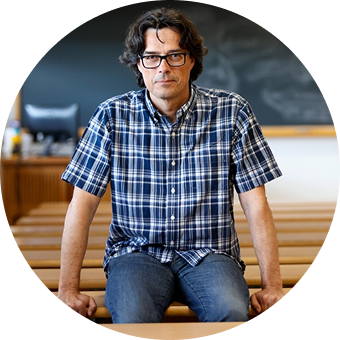
Lead Researcher
Miguel Vázquez Liñán
Miguel Vázquez Liñán is a Professor in the Department of Journalism 1 at the University of Seville. He holds a PhD in Information Sciences and specializes in the theory and history of political propaganda, as well as the relationship between cultural memory and communication, with a particular focus on the political uses of the past. Within these frameworks, much of his research has focused on the analysis of the media system and the history of propaganda in Russia, as well as memory policies in that country.
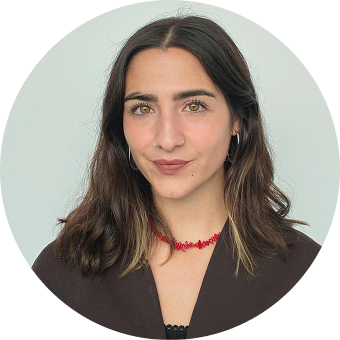
Researcher
Cora Cuenca Navarrete
Cora Cuenca Navarrete holds a PhD in Communication from the University of Seville. She graduated with a double degree in Journalism and Audiovisual Communication and holds a Master’s degree in Philosophy and Modern Culture from the same institution. She was awarded a University Teacher Training (FPU) fellowship by the Spanish Ministry of Education and Vocational Training and is currently affiliated with the “Critical History of Andalusian Journalism” (HICPAN) research project. Her primary research interests include historical memory, visual studies, and the relationship between ethics and aesthetics in cinema. Related to this field of study, she has directed two documentaries: Acero y Pólvora (winner of the Suroscopia Award for Best Andalusian Short Film) and Ranilla.
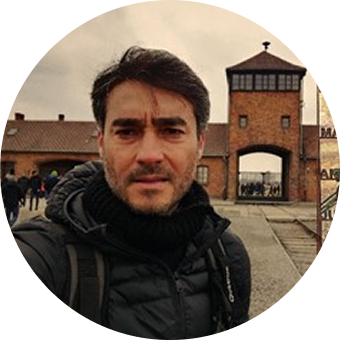
Researcher
Javier Giráldez Díaz
Javier Giráldez Díaz is a secondary school teacher in the province of Cádiz. He holds a PhD in Contemporary History from the University of Seville. He has served as an Associate Professor at the University of Huelva (2004–2005) and worked as an advisor and project coordinator for the Commissariat for Historical Memory of the Regional Government of Andalusia (2008–2012). Subsequently, between 2015 and 2019, he was the Director General for Democratic Memory of the Regional Government of Andalusia. He is currently a member of several research projects related to the recovery of historical memory and Francoist repression in Andalusia.
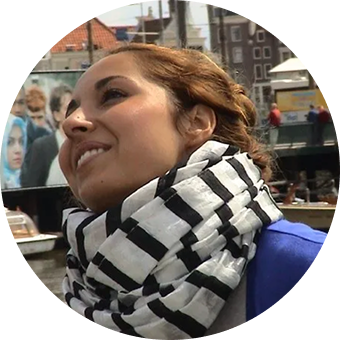
Researcher
Raquel Almodóvar Anaya
Raquel Almodóvar Anaya is a Lecturer in the Department of Journalism I at the University of Seville and previously taught Anthropology at the University of Huelva (2017–2019). She holds Bachelor’s degrees in Anthropology and Journalism from the University of Seville, and in Political Science and Sociology from UNED. She is currently conducting her doctoral research on Francoist repression against women in the province of Huelva. Professionally, she stands out as an anthropologist specializing in ethnological and intangible heritage, a role she has carried out since 2015 for various public institutions, including the Andalusian Institute of Historical Heritage. As a result of her work, she also produced an audio documentary for Cadena SER titled Zufre, una historia de muerte y supervivencia (Zufre, a Story of Death and Survival, 2020).
Researcher
Adrián Tarín Sanz
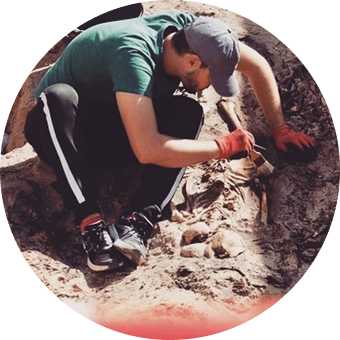
Adrián Tarín Sanz is a faculty member at the Amawtay Wasi Intercultural University of Indigenous Nationalities and Peoples (UINPIAW) and the Equinoctial Technological University (UTE), both in Ecuador. He holds a PhD in Communication from the University of Seville (Spain), specializing in the theory and history of propaganda. In recent years, his research has focused on the media construction of political identities and their memory. He has authored around thirty scientific publications and, in addition to MEYCOM, is a member of the “Community Communication, Interculturality, and Digital Mediations” (ComuMedia) research group. Between 2023 and 2025, he was an Assistant Professor in the Department of Communication and Education at Universidad Loyola Andalucía. He also served as a Master’s Thesis (TFM) supervisor at the International University of La Rioja (2023) and as a Full Professor at the Central University of Ecuador (2015–2021). He collaborates with community media outlets such as El Salto and is a member of the Association for the Recovery of Historical Memory (ARMH) in Spain, with whom he participated in the exhumation of the Francoist mass grave at the San José Cemetery (Cádiz). Furthermore, he is a member of the General Confederation of Labor (CGT) union and the Journalists’ Union of Andalusia (SPA), and is a member of the Memory Studies Association (MSA).
Researcher
Salomé Sola-Morales
Salomé Sola-Morales is an Associate Professor in the Department of Journalism 1 at the University of Seville. She holds a PhD in Media, Communication, and Culture from the Autonomous University of Barcelona (UAB) and a Master’s degree in Politics and Democracy from UNED. She has taught at UAB, the International University of Catalonia, and the University of Santiago, Chile, and has been a visiting professor at the Complutense University of Madrid and Sapienza University of Rome. Adopting an inclusive and feminist approach, her research focuses on communication theories and methodologies, technopolitics and social movements, political participation, democracy, and youth, as well as cyberculture, body, gender, and online identity processes.

Researcher
José Candón-Mena
José Candón-Mena is a Professor of Communication at the University of Seville. He holds a PhD in Communication Sciences and Sociology from the Complutense University of Madrid, a Bachelor’s degree in Advertising and Public Relations from the University of Málaga, an MA in Communication for Public and Political Institutions from the Complutense University, and an MA in Teaching and Research for Higher Education from the UNED (National Distance Education University). He is a researcher with the MEYCOM Group, organizer of the Move.net Conference on Social Movements and ICTs, a member of the editorial board of the Revista Española de Sociología (Spanish Journal of Sociology – RES), and director of the Colección Activismo Mediático (Media Activism Collection) at the Comunicación Social publishing house. He teaches the course “Communication in NGOs and Social Movements.” His research interests include communication, journalism, community media, social advertising, NGO communication, social movements, technopolitics, digital democracy, deliberative democracy, and the social appropriation of ICTs, among others.
Researcher
Daniele Salerno
Daniele Salerno is a faculty member at the University of Seville. He holds a PhD in Semiotics from the University of Bologna (Italy) and specializes in memory studies, developing two primary research lines: the media construction of the memory of political violence events, and the relationship between memory and activism. He was a researcher at the University of Bologna (2009–2018), a Marie Skłodowska-Curie Global Fellow within the MemoRights – Cultural Memory in LGBT+ Activism project at Utrecht University (2019–2022), and a visiting researcher at the University of Buenos Aires, the International Institute of Social History in Amsterdam, the University of London, and University College London. In 2024, alongside Marit van de Warenburg, he received the Zumkehr Prize for the best article in public memory for “‘Bella Ciao’: A Portable Monument for Transnational Activism”. He collaborates with the Utrecht Forum for Memory Studies (Utrecht University), the Núcleo de Estudios sobre Memoria (IDES/CIS/CONICET, Argentina), and the Center for the Semiotic Study of Memory (University of Bologna).
Researcher
Belén Zurbano Berenguer
Belén Zurbano Berenguer is a Lecturer in the Department of Journalism I at the University of Seville. She holds a Bachelor’s degree in Journalism and a PhD in Communication with an International Mention. Engaging with academia through critical feminist epistemologies and situated knowledges, she specializes in the study of media and violence against women and girls. In recent years, her work has focused on communication processes from feminist perspectives on eco-social transformation, deontology studies, and the connections between the imagination of the future and narratives of the past. Since 2017, she has been a member of the Gender, Economy, Politics and Development Observatory (GEPDO).
Researcher
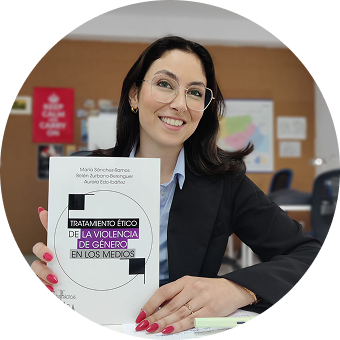
María Sánchez-Ramos
María Sánchez-Ramos is a journalist and lecturer at the Faculty of Communication of the University of Seville. A former Fulbright scholar at the University of Pennsylvania (UPenn) and an FPU fellow at the University of Seville, she is a member of the Historical Memory and Communication Research Group – MEYCOM (HUM-1087). Her research focuses on the media representation of (sexual) violence against women, journalistic ethics, and gender and communication studies. Currently, she is involved in the Spanish Ministry of Science and Innovation (MICIN) R&D&I projects “Youth, feminism and social networks: perception and impact of feminist discourse in Spain in times of social transformation” and “CETICOM-2G Ethics and Self-Regulation of Social Communication.” Her notable publications include Tratamiento ético de la violencia de género en los medios (Sánchez-Ramos, Zurbano, & Edo, 2024) and La prensa andaluza ante el caso de La Manada. Violencias sexuales y deontología periodística (Sánchez-Ramos, 2021). She has conducted research stays at UNAM and UPenn and collaborates with media outlets such as eldiario.es, Público, El Salto, and 7TV. In terms of public engagement, she stands out for her work as an equality officer in secondary schools, universities, and the Sevilla II Penitentiary Center, where she directed Gendermedial—media literacy for equality for incarcerated men. Her work has been recognized with the AE-IC 2021 Youth Award for Communication Research, the VI Rosario Valpuesta Research Award, and the 2019 Youth Award for Scientific Culture from the Seville City Council.
Researcher
Ana Sánchez Tejedor
Ana Sánchez Tejedor is a predoctoral researcher and a communication and graphic production professional specializing in social communication. She has worked independently in the design and coordination of projects linked to the 2030 Agenda and social impact, integrating strategic communication and social narratives. Her career combines professional practice with academic research, exploring how communication can contribute to social transformation. Currently, her primary research lines are oriented towards the search for new future narratives from an ecofeminist perspective.
Researcher
Laura Martínez-Jiménez
Laura Martínez Jiménez holds a PhD in Social Sciences and a Master’s degree in Gender and Equality from Pablo de Olavide University, and a Bachelor’s degree in Journalism from the University of Seville. Driven by a transdisciplinary enthusiasm, her research and learning center on feminist communication and cultural studies, with special attention to popular culture, alternative media, the de-democratization of anti-/post-feminisms, and journalism and social communication with a feminist, eco-socially sustainable, and human rights approach. Currently, she is an Adjunct Professor at the Universidad Europea Miguel de Cervantes and the Universitat Oberta de Catalunya, as well as a faculty member in the Department of Journalism II at the University of Seville.
- ORCID
- Google Scholar
- ResearchGate
- Zenodo: Laura Martínez-Jiménez
- lmjimenez@us.es / lmartinez@uemc.es
Collaborating Researcher
Rubén Díaz López
Rubén Díaz López is a university lecturer and researcher in the fields of communication, cultural studies and public policies on memory. He holds a Bachelor’s degree in Audiovisual Communication and a Master’s degree in Communication and Culture from the University of Seville, and a PhD from the Programme in Legal and Political Sciences at Pablo de Olavide University. He is the author of the thesis “Re-articulating public policies of memory: towards an agonistic model”, in which he analyses the political uses of traumatic pasts and the discursive logics that shape different memorial regimes in democratic Spain. As a research associate with the MEYCOM Group (Memory and Communication: The Political Uses of the Past), he has built a career at the intersection of social research, cultural production, international teaching and citizen participation projects, with experience in organisations such as ZEMOS98, the European Cultural Foundation and Verto Education, an academic partner of the University of New Haven (USA). His areas of research focus on collective memory, political communication, discourse theory, visual culture, media literacy, social inclusion and the public uses of the past, with a particular interest in cultural institutions mediating democratic conflict.
Collaborating Researcher
Victoria César Velázquez
Victoria César Velázquez holds a PhD in Communication from the University of Seville. Her research focuses on constructing a social history of the Andalusian memorialist movement (2000–2018) as narrated by its protagonists. She graduated in Journalism from the University of Seville. In 2021, she joined an international volunteering program through a scholarship from the University of Seville’s Cooperation Office, which led her to join the team at the Ecuadorian Center for the Promotion and Action of Women (CEPAM) in Quito, Ecuador. She has collaborated with the “Critical History of Andalusian Journalism” (HICPAN) project, contributing to the Guía del Patrimonio Periodístico Andaluz (2021) with the essay Memoria Histórica. Tras las huellas de Renée Lafont.
Collaborating Researcher
Yoandry Avila Guerra
Yoandry Ávila Guerra is currently pursuing a Master’s degree in Communication and Culture at the University of Seville. He graduated with a Bachelor’s degree in Preservation and Management of Cultural-Historical Heritage from the University of Havana. His research interests focus on media institutions as spaces of memory construction, the heritage value of journalistic discourse, and the relationships between historical memory and migration. He is the author of the book Piel adentro. Entrevistas a artistas, guionistas y realizadores cubanos (Skin Deep: Interviews with Cuban Artists, Screenwriters, and Directors). He has collaborated with various media outlets and specializes in historical and cultural journalism.
Collaborating Researcher
Salvador Leetoy López
Salvador Leetoy López is an Associate Professor in the Department of Media and Digital Culture at Tecnológico de Monterrey (Mexico) and a member of the National System of Researchers (SNI, Level I). He holds a PhD in Cultural Studies from the University of Alberta (Canada) and was a Fulbright Professor in the Department of Culture and Society at Drake University (USA). He has also been a visiting professor at the University of California, San Diego (USA), and the University of Seville. Additionally, he serves as the regional representative for Latin America and the Caribbean for the Association for Cultural Studies. His research focuses on social memory, participatory communication, subaltern studies, and technopolitics.
Collaborating Researcher
Pedro de la Rosa
Pedro de la Rosa Gil graduated in Journalism from the University of Seville, where he also completed a Master’s degree in Communication and Culture, and is currently preparing to begin his doctoral studies. He is taking his first steps in academic research, specializing in cultural studies, propaganda, and militarism. He has written for various publications specialising in culture, such as Break, Manual and GTM, and has also led a workshop on film and work at the Casa Tomada bookshop.