
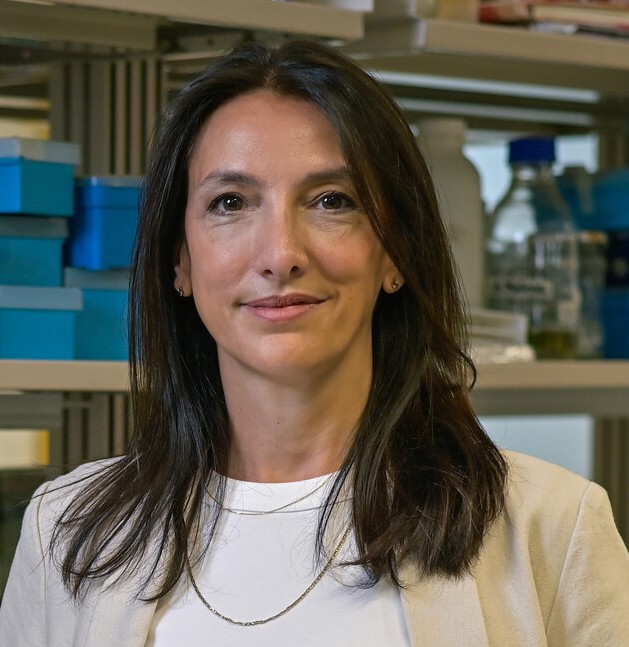
Name: Lorena Betancor Dutrenit
Affiliation: Universidad ORT Uruguay
Address: Mercedes 1237, 11100, Montevideo Uruguay
ORCID: 0000-0002-0569-0499
Scopus: 35554463600
Short biography:
Dr. Betancor is a Biochemist (UdelaR) and PhD (UAM, Spain), specialized in enzyme technology and biocatalysis. She trained at CSIC and completed postdocs at Georgia Tech and University of Cambridge, working on lipases, oxidases, nitroreductases, mutases, and polyketide synthases. She is Professor at Universidad ORT Uruguay where she leads the Protein Technology Lab (since 2010) and Adjunct Professor at McGill. Her group focuses on enzyme and whole-cell biocatalysis, multi-enzyme systems and enzyme immobilization. She has supervised 4 PhD and 8 MSc theses and currently supervises 2 PhD and 3 MSc students. She is Research Director at the Biotechnological Center (Montevideo) and CEO/co-founder of Promethenz (2024), a deep-tech startup in nanotechnology-based therapies. She holds the maximum researcher level in the Research National System in Uruguay (Level 3-SNI-ANII), is Editor of Results in Chemistry, Senior Associate Editor of Transactions in Nanobioscience, and Current Opinion in Green and Sustainable Chemistry, and has 86 papers, 8 book chapters, and 4 patents.
University/Company description:
Universidad ORT Uruguay is an innovative and entrepreneurial university with a strong focus on science, technology, management, and design. Our mission is to educate citizens capable of fulfilling their own personal and professional aims and provide leadership and service to society. We aim to provide a transformative learning experience encompassing disciplinary knowledge; innovative attitudes, relational skills and ethical values. Our distinctive features include: a focus on quality teaching through teachers with the highest academic degrees; teacher training and support; large number of need-based scholarships; strong support for job placement and entrepreneurship initiatives; constant interaction with companies, government and civil society institutions, and relevant international exchanges with more than 220 universities from all over the world. Yearly, ORT teaches over 16,000 students: 7% postgraduate (ISCED levels 7 and 8), 54% undergraduate (ISCED level 6), and 39% vocational (ISCED levels 5). We grant over 2,400 scholarships each year. More than 1,400 students graduate each year from Universidad ORT Uruguay with an overall average of 97% of job placement. Alumni are 25,000+ (since 1997). Universidad ORT Uruguay employs over 1,855 academic staff including faculty, instructors, and researchers.
Facilities, infrastructure & equipment:
The University operates across two campuses with more than 29,700 m² of built facilities, providing a solid institutional framework for education, research, and innovation. Infrastructure includes teaching and research laboratories, hybrid classrooms, prototyping and 3D printing facilities, project rooms, auditoriums, and multimedia-equipped seminar spaces, supported by high-speed fiber-optic connectivity and campus-wide Wi-Fi.
A key strength lies in applied biotechnology. Since 2010, the University has operated a dedicated 600 m² laboratory building focused on technology development, validation, and pre-industrial activities. In 2014, the Biotechnology Centre for Research and Innovation (CBI+I) was established to address industry-driven challenges. Facilities support microbial and cell-based systems and are equipped with PCR and qPCR, HPLC and UHPLC, UV-Vis spectroscopy, fluorescence and kinetic plate readers, FPLC (ÄKTA Avant), automated 5 L bioreactors, SpinChem reactors, and particle characterization (DLS and zeta potential). Strategic partnerships provide access to large-scale fermentation, DSC, and advanced analytical infrastructure, strengthening capacities for technology scaling, demonstration, and transfer.
Relevant publications and/or research/innovation products:
- F. Pirotti, N. Soriano, M. Ripoll, P. Domínguez de María, C. J. Barrow, L. Betancor, Improving the sustainability of Gluconobacter oxydans L-sorbose production using food waste media and recyclable resting cells, Sustain. Chem. Pharm. 2025, 46, 102098
- B. Torres-Herrero, I. Armenia, J. Martínez de la Fuente, L. Betancor, V. Grazú, Opportunities for nanomaterials in enzyme therapy , J. Control. Release, 2024, 372 , 619 – 647.
- B. Torres-Herrero, I. Armenia, M. Alleva, L. Asín, S. D. Correa, C. Ortiz, Y. Fernández-Afonso, L. M. Gutiérrez, J. de la Fuente, L. Betancor, V. Grazu, Remote Activation of Enzyme Nanohybrids for Cancer Prodrug Therapy Controlled by Magnetic Heating, ACS Nano, 2023, 17, 12358 – 12373.
- C. Ortiz, E. Jackson, L. Betancor, Immobilization and stabilization of enzymes using biomimetic silicification reactions. J. Sol-Gel Sci. Technol. 2022, 102, 86-95.
- L. Betancor, F. López-Gallego, Cell–enzyme tandem systems for sustainable chemistry. Curr. Opin. Green Sustain. Chem. 2022, 34, 100600